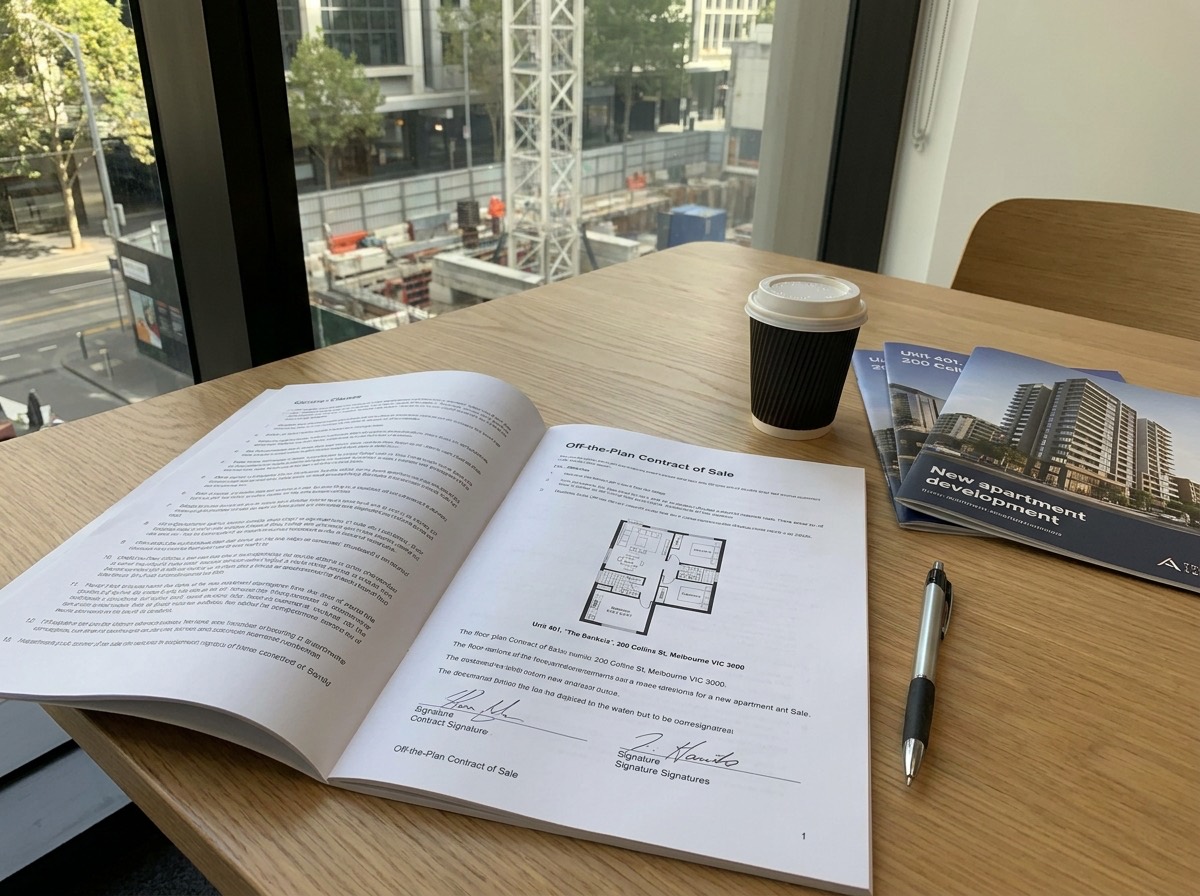
Buying off the plan can be a smart way into a new development, but you are committing to a property that does not exist yet.
Here is what an off-the-plan contract is, where the risks sit for buyers, and what to check before you sign.
1. What "off the plan" actually means
An off-the-plan purchase is a contract to buy a lot, an apartment, townhouse or parcel of land, before it is built or titled. You sign and pay a deposit now, and settle once the development is finished and the title is registered.
That gap, often many months or longer, is where most of the risk lives. You are relying on the contract and the plans rather than something you can walk through and inspect.

2. The main risks for buyers
Because the property is not finished, the issues that come up most often are:
- Sunset clauses. A sunset date is the deadline by which the development must be finished. If it passes, one or both parties may be able to end the contract. Read carefully who can terminate, and on what terms.
- Variations to the plan. Contracts often let the developer change finishes, sizes or layout within limits. Know how much can change before you are able to object.
- Finance and valuation. Your lender values the property at settlement, not when you sign. If the valuation comes in below the price, you may need to cover the difference.
- Delays. Construction can run late. Understand what happens to your deposit and your obligations if it does.
- The developer's position. Who you are contracting with, and their track record, matters when settlement is a long way off.
The contract and the plans, not the display suite, are what you are bound by.
3. What to check before you sign
A review before you sign is far cheaper than trying to fix a problem at settlement. The points worth getting clear on:
- the sunset date, and who can end the contract if it passes
- how much the developer can vary the plans and finishes
- the deposit amount, and where and how it is held
- a finance condition, if you need one, and its timing
- the body corporate or community title arrangements and the likely levies
- defects, and the process for having them fixed after completion
When to get advice
If you are considering an off-the-plan contract, the right time to have it reviewed is before you sign, while changes are still possible. We can read the contract, explain your position in plain English, and flag the terms worth negotiating. See our property and development page for how we help.

This article is general information only and is not legal advice. It may not apply to your circumstances, and the law can change. Seek advice tailored to your situation before acting.